


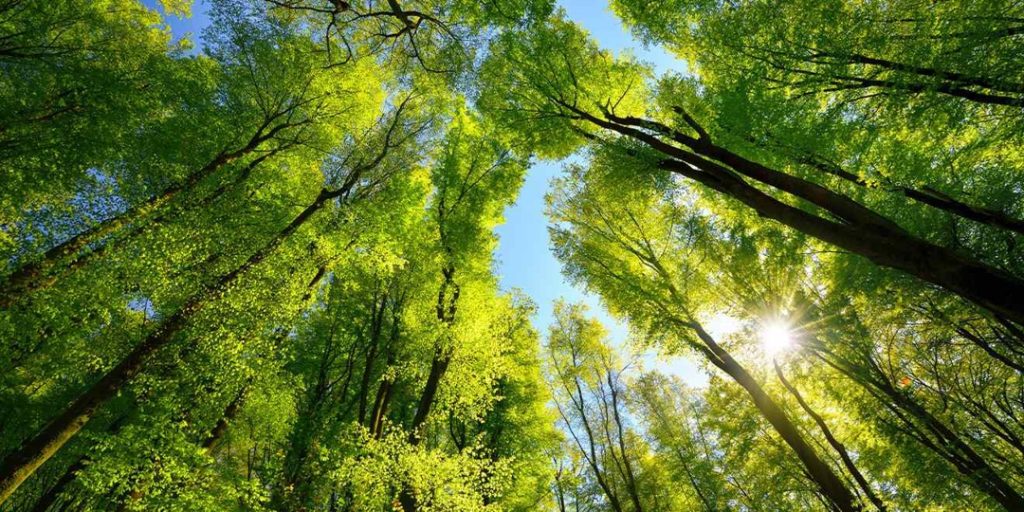
From the dawn of human civilization, trees have been our silent partners, our providers, and our inspiration. They are the oldest living organisms on Earth, with some specimens, like the bristlecone pines, weathering over 5,000 years of history. They form the backbone of terrestrial ecosystems, create the very air we breathe, and offer a profound sense of peace and wonder. Yet, for all their ubiquity, the incredible diversity and complexity of trees often go unappreciated. This article delves into the world of these magnificent plants, exploring their fundamental biology, their critical role on our planet, and the vast tapestry of types that clothe our world in green.
Part 1: What is a Tree? More Than Just a Big Plant
At its most basic, a tree is a perennial plant with an elongated stem, or trunk, supporting branches and leaves. However, this simple definition belies a sophisticated biological structure. Unlike smaller plants, trees achieve their size and longevity through a process of secondary growth, which allows them to grow wider each year. This is the work of two key tissues:
- Cambium: A thin layer of generative tissue that lies between the inner bark (phloem) and the wood (xylem). Each growing season, the cambium produces new cells in both directions.
- Xylem: The cells produced inward become xylem, or wood. This tissue transports water and minerals from the roots up to the leaves. As older xylem cells die, they form the strong, structural heart of the tree—what we know as lumber.
- Phloem: The cells produced outward become phloem, or inner bark. This living tissue transports the sugars created by photosynthesis in the leaves down to the rest of the tree for energy and storage.
This process creates the iconic growth rings visible in a cross-section of a trunk. Each pair of light (early growth) and dark (late growth) rings typically represents one year of life, offering a historical record of climate conditions the tree experienced.
The other defining characteristic of trees is their height. By growing tall, trees outperform other plants in the competition for sunlight, the essential fuel for photosynthesis. This height is supported by a remarkable material: lignin. This complex polymer impregnates the cell walls of wood, making them rigid and incredibly strong, allowing trees to stand against gravity and weather ferocious storms.
Part 2: The Lifeline of Our Planet: Why Trees Are indispensable
The value of a tree extends far beyond its timber. They are ecological powerhouses, providing services that are fundamental to life on Earth.
- Climate Regulators: Trees are the planet’s lungs. Through photosynthesis, they absorb carbon dioxide (CO₂)—a major greenhouse gas—and release life-sustaining oxygen. A single mature tree can absorb an average of 48 pounds of CO₂ per year, making forests crucial carbon sinks in the fight against climate change.
- Ecosystem Engineers: A single tree can be a entire habitat. Its crown provides shelter and nesting sites for birds and mammals. Its bark hosts insects, mosses, and lichens. Its roots stabilize soil, and its flowers provide nectar for pollinators. Fallen leaves decompose to create rich humus, nourishing the soil for future generations of plants.
- Water Stewards: Tree roots create channels in the soil that allow rainwater to infiltrate rather than run off, reducing erosion and flooding. They then release water vapor back into the atmosphere through transpiration, influencing local and regional rainfall patterns.
- Human Wellbeing: Beyond providing food, medicine, and materials, trees have a demonstrable effect on human health. Studies show that access to green spaces reduces stress, improves mental health, and even accelerates healing. They cool urban environments, reduce noise pollution, and increase property values.
Part 3: A Forest of Diversity: Classifying Tree Types
The tree family is incredibly diverse, with an estimated 60,000+ species worldwide. Botanists use a complex taxonomic system to classify them, but for most people, understanding the broad categories is the key to appreciation. We can classify trees based on their leaf type and their reproductive strategy.
The Great Divide: Angiosperms vs. Gymnosperms
This is the most fundamental split in the plant kingdom.
- Gymnosperms: Meaning “naked seed,” these trees produce seeds that are not enclosed in an ovary or fruit. Instead, seeds are typically borne on the surface of scales, which are often arranged into cones. This group includes the conifers (pines, firs, spruces) as well as ginkgos and cycads. They are typically evergreen and have needle-like or scale-like leaves.
- Angiosperms: Meaning “vessel seed,” these are the flowering plants. Their seeds develop within an ovary that matures into a fruit. This is the most diverse group of plants on Earth, encompassing all broadleaf trees (oaks, maples, willows) as well as palms and fruit trees. They can be evergreen or deciduous.
The Seasonal Wardrobe: Deciduous vs. Evergreen
- Deciduous Trees: These trees shed their leaves seasonally, usually in autumn. This is an adaptation to survive cold winters or dry seasons when water is scarce and photosynthesis is less efficient. The process is triggered by changes in daylight and temperature. Before shedding, the trees reabsorb valuable nutrients from the leaves, resulting in the spectacular displays of red, orange, and yellow we associate with fall.
- Evergreen Trees: These trees retain their leaves throughout the year. They do shed leaves, but they do so gradually and consistently, not all at once. This allows them to photosynthesize whenever conditions are favorable. Most conifers are evergreen, but some broadleaf trees, like live oaks and many tropical species, are also evergreen.
Part 4: A Walk Through the Woods: Common Types of Trees
Let’s explore some of the most common and iconic tree types found across the globe’s various biomes.
I. The Conifers (Gymnosperms)
Conifers dominate the vast boreal forests of the north and are common in many other regions. They are typically fast-growing, softwood trees (though the wood is not always “soft”).
- Pine (Pinus spp.): Perhaps the most recognizable conifer, pines are known for their long, bundled needles (in groups of 2, 3, or 5) and their distinctive cones. They are pioneer species, often among the first to colonize disturbed land. Examples: Eastern White Pine, Scots Pine, Ponderosa Pine.
- Spruce (Picea spp.): Spruces have sharp, stiff, single needles that are square in cross-section and grow from small, woody pegs. Their cones are pendulous (hanging down). They have a classic “Christmas tree” shape. Examples: Norway Spruce, Blue Spruce.
- Fir (Abies spp.): Firs have soft, flat needles that are attached directly to the branch, often appearing to grow in two rows. Their cones stand upright on the branches and disintegrate while still on the tree. Examples: Balsam Fir, Noble Fir.
- Cedar (Cedrus and Thuja spp.): True cedars (Cedrus) have dense clusters of needles and large, barrel-shaped cones. The wood is famously aromatic and rot-resistant. The name “cedar” is also applied to many other trees like Eastern Red Cedar (which is actually a juniper) and Western Red Cedar. Examples: Atlas Cedar, Cedar of Lebanon.
- Sequoia (Sequoiadendron giganteum) and Redwood (Sequoia sempervirens): The titans of the tree world. Giant Sequoias are the most massive trees on Earth, while Coast Redwoods are the tallest, reaching heights of over 380 feet. These California natives are living monuments to time.
II. The Broadleaf Trees (Angiosperms)
This group contains immense variety, from mighty oaks to delicate dogwoods.
A. Temperate Broadleaf Deciduous Trees
These are the stars of the seasonal forests of North America, Europe, and Asia.
- Oak (Quercus spp.): A symbol of strength and endurance, oaks are keystone species supporting more life forms than any other native trees. They have lobed leaves and produce the familiar acorn nut. They are divided into White Oak and Red Oak groups. Examples: White Oak, Northern Red Oak, English Oak.
- Maple (Acer spp.): Known for their brilliant fall color and their distinctive winged seeds (samaras) that spin like helicopters. Many are tapped for their sweet sap to make maple syrup. Examples: Sugar Maple, Red Maple, Norway Maple.
- Beech (Fagus spp.): Beeches have smooth, gray bark and simple, oval leaves with parallel veins. They produce a small, prickly nut. Their canopies are dense, creating deep shade on the forest floor. Examples: American Beech, European Beech.
- Birch (Betula spp.): Easily identified by their beautiful, papery bark that often peels in sheets, birches are pioneer species. They have small, triangular leaves and delicate catkins. Examples: Paper Birch, River Birch.
- Willow (Salix spp.): Willows love water and are commonly found along riverbanks. They have narrow, lance-shaped leaves and incredibly flexible branches. They are fast-growing but often short-lived. Examples: Weeping Willow, White Willow.
- Aspen (Populus tremuloides): Known for their leaves that flutter in the slightest breeze due to flattened petioles. They form vast clonal colonies from a single root system, making them some of the largest organisms on Earth. Their white bark is striking.
B. Tropical Broadleaf Trees
The tropical rainforests are home to an explosion of biodiversity, and their trees are no exception.
- Mahogany (Swietenia spp.): Prized for its high-quality, durable, and beautifully reddish-brown wood, mahogany is a canopy tree in tropical Americas. Overharvesting has made it endangered in many areas.
- Teak (Tectona grandis): Another highly valuable timber tree, native to South and Southeast Asia. Its wood contains natural oils that make it exceptionally resistant to rot, insects, and weather, making it ideal for outdoor furniture and boat decks.
- Kapok (Ceiba pentandra): A truly massive emergent tree that towers above the rainforest canopy. Its trunk is often buttressed for support, and its seeds are embedded in a fluffy, cotton-like fiber that was once used for life jackets.
- Strangler Fig (Ficus spp.): This tree begins its life as a seed deposited by a bird high in the branches of a host tree. It sends roots down to the ground, eventually enveloping and “strangling” the host, becoming a free-standing tree itself. It is a keystone species, providing fruit for countless animals.
C. Unique and Specialized Trees
Some trees defy easy categorization.
- Palms (Arecaceae family): Technically giant woody monocots (like grasses), not true trees, palms are iconic of tropical and Mediterranean landscapes. They have a single apical meristem (growing point), meaning if the top is cut off, the palm will die. Examples: Coconut Palm, Date Palm.
- Tree Ferns (Various families): These ancient plants were a dominant form of vegetation during the Carboniferous period. They have a thick, upright rhizome that forms a trunk, crowned with large, feathery fronds. They thrive in moist, shady environments.
- Baobab (Adansonia spp.): The “upside-down tree” of Africa and Madagascar. Its massive, bottle-shaped trunk stores vast quantities of water to survive drought conditions. It is a lifeline for both animals and humans in the savanna.
- Eucalyptus (Eucalyptus spp.): Native to Australia, these fast-growing evergreens are known for their aromatic oils and their peeling bark. They are adapted to fire, with buds protected under the bark that sprout after a blaze. Koalas are specialized to eat their leaves.
Part 5: Trees in Our Care: Planting and Conservation
Understanding tree types is the first step toward becoming better stewards of them. When planting a tree, considering its type is crucial for its success and yours.
- Right Tree, Right Place: A sun-loving pine will struggle in deep shade. A massive red oak is a poor choice for a small city yard. Consider the tree’s mature size, its sunlight and water needs, and its purpose (shade, fruit, privacy, wildlife habitat) before planting.
- Native Species: Whenever possible, choose native tree species. They are adapted to local pests, diseases, and climate conditions, require less water and care, and provide the best support for local wildlife, from insects to birds.
- The Threat and The Response: Globally, forests face unprecedented threats from deforestation, climate change, invasive pests, and disease. The loss of trees contributes to biodiversity loss, soil degradation, and climate disruption.
- Conservation Efforts: Supporting reforestation and afforestation projects, practicing sustainable forestry, and protecting old-growth forests are critical. On an individual level, we can plant trees, support conservation organizations, and make consumer choices that favor sustainably sourced wood products.
Conclusion: A Legacy of Green
Trees are not merely part of our landscape; they are woven into the very fabric of our existence. They are history books written in rings, climate regulators working silently, and cathedrals of nature that inspire awe. From the rugged conifers guarding mountain slopes to the generous fruit trees in an orchard and the majestic broadleaves of a temperate forest, each type tells a story of adaptation and resilience.
By learning to identify them, understand their needs, and appreciate their roles, we forge a deeper connection to the natural world. We become more invested in their survival. In protecting and planting trees, we do more than just improve our immediate surroundings; we invest in cleaner air, healthier ecosystems, and a more stable climate. We plant a legacy of green that will shade, nourish, and inspire generations long after we are gone. The silent giants have given us everything; it is our turn to speak for them.