
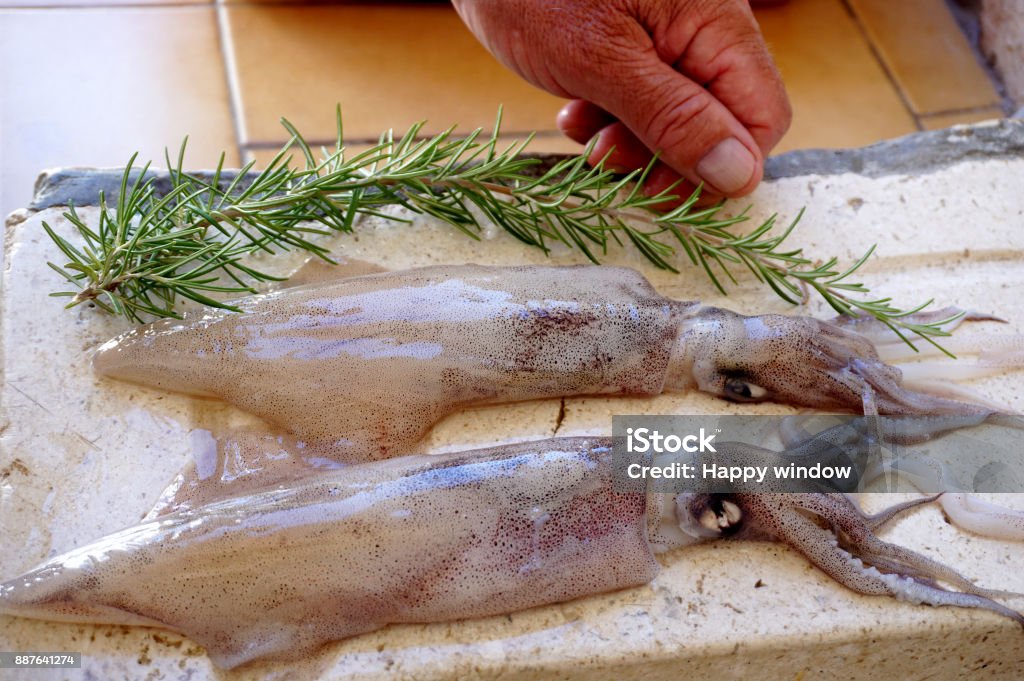
Along the rugged and sun-drenched coasts of Sicily, particularly in the southwest, where the Mediterranean Sea carves its history into the limestone cliffs, lie silent, enigmatic structures. They are often partially submerged, accessible only by boat or treacherous paths, their forms blending so seamlessly with the natural rock that they are easily mistaken for sea caves. These are the calamariere (singular: calamaraia), ancient stone traps for catching squid. More than just fishing tools, they are profound monuments to human ingenuity, a testament to a symbiotic relationship with the sea that stretches back millennia. They represent a forgotten chapter in maritime history, a pre-industrial technology born of acute observation and a deep, generational understanding of marine biology and coastal topography.
To understand the calamaraia is to understand a philosophy of fishing that is the antithesis of modern, industrial trawling. It is passive, sustainable, and deeply respectful of the natural cycles of the sea. It is a dialogue with nature, not a conquest. This article will delve into the anatomy, function, history, and cultural significance of these remarkable structures, exploring why they stand today not as ruins of a dead past, but as beacons of wisdom for a sustainable future.
Anatomy of a Trap: Deciphering the Structure
A calamaraia is not a random construction. Its location and design are the results of precise and refined knowledge passed down through generations of Sicilian fishermen. The structure can be broken down into several key components, each serving a specific and vital function.
1. The Location: The Foundation of Success
The selection of the site is the most critical step. Calamariere are always built in specific coastal zones characterized by:
- Rocky Seabeds and Underwater Caves: Squid (Loligo vulgaris and Sepia officinalis, or cuttlefish, are also common catches) are demersal creatures, meaning they live and feed near the seabed. They are attracted to rocky, complex environments that offer shelter and breeding grounds. An area naturally rich in underwater crevices and seaweed is ideal.
- Specific Water Depth: They are typically constructed in shallow waters, ranging from two to ten meters deep. This depth is crucial for the next element: light.
- Proximity to Deep Water: While the trap itself is shallow, it is most effective if located near a sudden drop-off or channel leading to deeper water. This provides the squid with a natural migration path directly past the trap.
2. The Enclosure: The V-Shaped Heart
The most recognizable feature of a calamaraia is its V-shaped or funnel-shaped stone wall. This is not a solid barrier but a dry-stone construction, meticulously built by stacking rocks without mortar. The wall can be dozens of meters long on each side, forming a wide opening that gradually narrows.
- The Function of the “V”: The V-shape acts as a giant funnel. Squid, moving along the coastline or migrating, encounter the wide arms of the structure. Instinctively, they follow the line of the wall, which gently guides them towards the apex, the narrowest point of the V.
- Dry-Stone Technique: The use of dry-stone is ingenious. It allows water to flow freely through the gaps, preventing the structure from being destroyed by wave action during storms. The porosity dissipates the energy of the waves, making the calamaraia remarkably resilient. This building technique is itself an ancient art, recognized by UNESCO as an Intangible Cultural Heritage of Humanity, practiced across the Mediterranean.
3. The Apex and the Capture Chamber
At the point where the two arms of the V meet lies the most ingenious part of the trap: the capture chamber, often called the “camera della morte” (chamber of death) or simply the “nassa” (a term for a trap). This is not always a fully enclosed space but a critical juncture.
- The Narrow Exit: The squid, having been funneled into this narrow space, finds its escape route blocked or confused. The design often includes a small, dark opening or a cul-de-sac that mimics the underwater caves they naturally seek for shelter.
- The Principle of Entrapment: Unlike a fish trap that may physically block escape, the calamaraia works largely on the squid’s psychology and phototaxis (attraction or aversion to light). Once in the confined, dark space of the apex, they are disoriented and less likely to swim back out the way they came.
4. The Missing Element: The Human Artifice
The stone structure is only half of the trap. The other half is the fisherman and his technique. The calamaraia is designed to be used on dark, moonless nights, capitalizing on the squid’s attraction to light.
- The “Luminara”: The fisherman would approach the calamaraia at night in a small boat, typically a traditional wooden luntru. He would light a powerful lamp, originally an oil lamp (luminara) and later a carbide or gasoline lamp. This lamp was suspended over the apex of the V.
- The Lure of Light: The light serves two purposes. First, it attracts plankton and small fish to the surface. Second, and more importantly, it attracts the squid, which follow their prey. The light, shining on the dark water above the capture chamber, creates an irresistible beacon. The squid, already congregated in the apex area by the stone walls, would rush towards the light, becoming easy targets for the fisherman waiting above with his spear (fiocina) or a simple handheld net (lampare).
This combination of permanent stone architecture and temporary, skillful application of light is what makes the calamaraia so effective. It is a system that harnesses topography, animal behavior, and elemental technology in a perfectly balanced synergy.
A History Written in Stone: From Antiquity to Decline
Tracing the exact origins of the calamariere is challenging, as their dry-stone construction leaves little datable material. However, their history is deeply intertwined with the successive civilizations that have dominated the Mediterranean.
Ancient Precedents: The Phoenicians and Greeks
The concept of fixed fish traps is ancient. The Phoenicians, master navigators and traders, are known to have used similar techniques throughout the Mediterranean. The Greeks, who colonized Sicily in the 8th century BCE, also practiced sophisticated fishing methods. While direct evidence linking them to the Sicilian calamariere is scarce, it is highly plausible that the knowledge base was established in this era. The Greek historian Oppian, in his Halieutica, describes fishing methods that rely on understanding fish behavior, suggesting the intellectual framework for such traps existed.
The Arab Influence: A Likely Catalyst
Many historians and ethnologists point to the Arab period of Sicilian history (9th-11th centuries CE) as the most probable time for the development and systematization of the calamariere. The Arabs were hydrological engineers par excellence, as evidenced by their sophisticated systems of irrigation (qanat) and water management. They had an advanced understanding of aquaculture and fishing. The very word “calamaraia” is thought by some linguists to have Arabic roots, possibly deriving from “qalam” (pen), perhaps a reference to the squid’s pen-shaped internal shell, or from other Semitic root words related to fishing weirs. The Arabs’ systematic approach to agriculture and resource management likely led to the refinement of these passive, large-scale fishing structures along the coasts they controlled.
The Medieval and Modern Heyday
Throughout the Middle Ages and into the modern era, up until the mid-20th century, the calamariere were a vital part of the coastal economy of Sicily. They were not public property but were often owned by noble families, local monasteries, or wealthy landowners, who would lease the fishing rights to cooperatives of fishermen. The catches were substantial and formed an important part of the local diet and trade. The knowledge of how to build, maintain, and fish the calamariere was a closely guarded secret, passed from father to son. This period represents the zenith of this technology, a time when human activity was seamlessly integrated into the coastal landscape.
The Decline: The March of “Progress”
The decline of the calamariere began in the post-World War II era, accelerating through the 1950s and 60s. Several factors contributed to their abandonment:
- Industrial Fishing: The advent of motorized fishing boats, nylon nets, sonar, and powerful electric lights made active, offshore fishing far more profitable and less labor-intensive. A single trawler could catch in one night what a calamaraia might yield in a season.
- Rural Depopulation: The great migration from the Sicilian countryside to the cities of Northern Italy and abroad left many traditional trades, including artisanal fishing, without a new generation to carry them on.
- Changing Regulations and Coastlines: Increased coastal development, pollution, and modern fishing regulations that did not account for traditional practices made the maintenance and use of calamariere difficult.
As a result, the stones were left to settle and the secrets began to fade from memory. The calamariere slipped beneath the waves of oblivion, becoming ghostly presences on the shoreline.
The Calamariere as Cultural and Ecological Archetype
Beyond their function as fishing tools, calamariere hold a deeper significance as cultural and ecological archetypes. They offer a powerful contrast to modern industrial practices and embody a philosophy that is urgently relevant today.
A Model of Sustainability
In an age of overfishing and ecological crisis, the calamaraia stands as a paradigm of sustainable resource use.
- Species-Selective: The trap is highly selective. It primarily catches squid and cuttlefish, with minimal bycatch of other fish species, especially when compared to the destructive drag of a trawl net.
- Passive and Low-Impact: It requires no fuel, creates no noise pollution, and does not damage the seabed. The dry-stone walls, over time, become artificial reefs, attracting marine life and enhancing local biodiversity. The structure works with the ecosystem, becoming a part of it.
- Inherently Limited: The yield of a calamaraia is limited by its size and natural squid populations. It prevents overexploitation by its very design, unlike industrial methods that strive for constant, maximized catch regardless of ecological limits.
A Testament to Intangible Cultural Heritage
The calamariere are physical manifestations of Intangible Cultural Heritage. The true “heritage” is not just the stones, but the vast body of knowledge required to use them:
- Astronomical and Meteorological Knowledge: Fishermen needed to know the phases of the moon, the patterns of currents, and the weather signs to determine the best nights for fishing.
- Biological Knowledge: A deep understanding of squid reproduction cycles, feeding habits, and migratory patterns was essential.
- Topographical and Engineering Knowledge: The skill to identify the perfect site and the engineering prowess to construct a wall that could withstand the sea’s fury for centuries.
This knowledge, accumulated through empirical observation and oral tradition, is a priceless human achievement. Its loss is a cultural tragedy on par with the physical deterioration of the structures themselves.
A Landscape of Memory
The calamariere dotting the coast, especially in areas like the Riserva Naturale Orientata Oasi Faunistica di Vendicari, the coast of Pachino, and around Marzamemi, are landscapes of memory. They are lieux de mémoire (sites of memory), as defined by French historian Pierre Nora. They trigger memories of a way of life centered on the sea, of communal labor, of the rhythm of the seasons. For local communities, they are a source of identity and pride, a tangible link to a past that, while harder, was perhaps more harmonious with the natural world.
Rediscovery and the Future: From Relic to Resource
In recent decades, there has been a growing interest in the calamariere. This renaissance is driven by a confluence of factors: a growing appreciation for sustainable food, the rise of cultural tourism, and a grassroots desire to reclaim local heritage.
Archaeology and Documentation
Researchers, historians, and marine archaeologists have begun to systematically map and document the remaining calamariere. Using GPS, underwater photography, and oral histories from elderly fishermen, they are creating a vital record of these structures before they are lost completely. This work is crucial for understanding their distribution, typology, and historical context.
Cultural Tourism and Diving
Some areas have begun to promote the calamariere as points of interest for cultural and eco-tourism. Snorkeling and diving tours are organized to allow people to see these underwater monuments firsthand. This not only generates economic benefits but also raises awareness about this unique heritage. Seeing a calamaraia in situ, with fish swimming through its stone walls, is a far more powerful lesson in sustainability than any textbook.
A Symbol for a New Maritime Ethos
Perhaps the most important role for the calamariere today is as a symbol. They serve as a physical reminder that there are alternatives to the extractive, industrial model that has brought the world’s fisheries to the brink of collapse. They inspire a new generation of fishermen, chefs, and consumers to think about seafood not as a commodity to be exploited, but as a resource to be managed with wisdom and respect.
There are even experimental projects exploring the reactivation of calamariere for small-scale, zero-impact fishing to supply the burgeoning market for high-quality, sustainably caught local seafood. While challenging from a regulatory standpoint, such initiatives represent a fascinating fusion of ancient wisdom and modern ecological consciousness.
Conclusion: The Enduring Whisper of the Stones
The calamariere of Sicily are more than just piles of stone in the sea. They are libraries of forgotten knowledge, architectural poems to human ingenuity, and silent witnesses to the passage of centuries. They speak of a time when fishing was an art, a ritual, a dialogue with the rhythms of the moon and the tides. Their gradual return to our collective consciousness is a hopeful sign.
In their resilient, porous walls, we can read a story of adaptation and endurance. They have survived storms, wars, and neglect. Now, as we face an environmental crisis largely of our own making, their quiet presence offers a lesson. They remind us that true progress is not always about inventing something new, but sometimes about rediscovering something old—a way of living on this planet that is not based on domination, but on a profound and respectful symbiosis.