


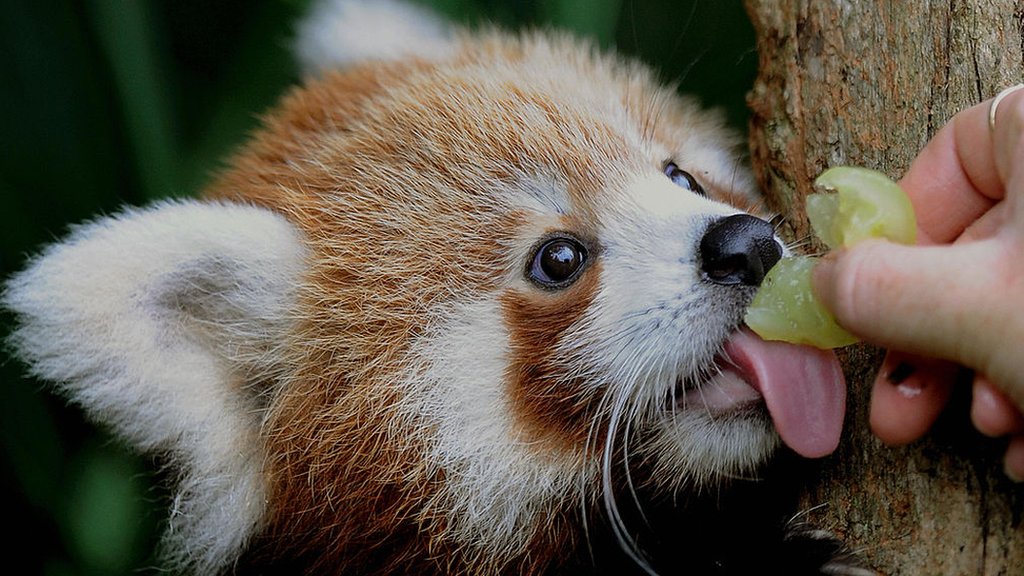
In the mist-shrouded, temperate forests of the Eastern Himalayas, a creature of fiery elegance and quiet mystery moves through the canopy. With its russet-red coat, ringed tail, and endearing facial markings, the red panda (Ailurus fulgens) seems like a living relic from a storybook. Yet, behind this captivating appearance lies a species fighting a silent, desperate battle for survival. The question “how many red pandas are left?” is not one with a simple, definitive answer. It is a complex equation involving elusive behavior, fragmented habitats, evolving science, and the relentless pressure of human activity. Current estimates suggest there are as few as 2,500 and potentially up to 10,000 mature individuals left in the wild, a precarious number that has earned them the official status of Endangered on the IUCN Red List of Threatened Species.
This article will delve deep into the challenges of counting this cryptic species, explore the primary threats driving their decline, and highlight the concerted conservation efforts offering a glimmer of hope for the “fire fox” of the Himalayas.
The Challenge of the Count: Why a Precise Number Eludes Us
Arriving at a single, accurate global population figure for the red panda is a monumental task fraught with logistical and scientific challenges. Unlike a herd of elephants on a savanna, red pandas are solitary, arboreal, and incredibly well-camouflaged inhabitants of dense, often inaccessible mountainous terrain.
- Elusive and Cryptic Nature: Red pandas are crepuscular (most active at dawn and dusk) and spend most of their lives high in the trees. Their reddish-brown coat provides perfect camouflage among the red moss and white lichen that adorn the branches of their forest home. Spotting them in the wild is a rare event, making traditional visual surveys highly inefficient and unreliable for a population census.
- Rugged and Inaccessible Habitat: Their range spans remote, steep, and rugged mountains across Nepal, India, Bhutan, northern Myanmar, and southern China. These areas are difficult and expensive for researchers to access, often requiring days of trekking. Political instability in parts of northern Myanmar further restricts scientific exploration and monitoring.
- The Evolution of Survey Techniques: For decades, population estimates were little more than educated guesses. Today, science has provided better, though still imperfect, tools:
- Scat Analysis (Genetic Census): This is now the gold standard for estimating red panda populations. Researchers meticulously collect droppings (scat) from survey transects. DNA extracted from these samples allows scientists to identify individual animals, much like a genetic fingerprint. By analyzing the number of unique individuals found in a specific area, researchers can extrapolate a population density estimate for that habitat block. This method is non-invasive and provides robust data, but it is time-consuming, expensive, and requires sophisticated laboratory support.
- Camera Trapping: Motion-sensor cameras placed along animal trails have become invaluable. They provide proof of presence, data on behavior, and sometimes allow for individual identification based on unique facial markings or tail rings. However, because red pandas are primarily arboreal, they may not trigger ground-based cameras as frequently as other species.
- Habitat Suitability Modeling: Scientists use satellite imagery and known location data to model and map areas of suitable red panda habitat—forests with old-growth trees, bamboo understories, and a water source. By estimating the carrying capacity of these suitable patches (how many animals a given area can support), they can generate a theoretical population ceiling.
It is the synthesis of these methods—genetic data from key areas, camera trap records, and habitat modeling—that gives us the current estimated range of 2,500 to 10,000 mature, breeding individuals. The significant variance itself is a testament to the remaining uncertainty.
A Species Divided: The Two Distinct Populations
Compounding the population challenge is the fact that there are not one, but two species of red panda. In 2020, genetic studies confirmed a long-suspected division:
- The Himalayan Red Panda (Ailurus fulgens): Found in Nepal, India, Bhutan, and northern Myanmar.
- The Chinese Red Panda (Ailurus styani): Found primarily in China (Yunnan and Sichuan provinces) and northern Myanmar.
This distinction is crucial for conservation. The two species have different genetic makeups and are likely adapted to slightly different ecological niches. A population estimate for one cannot be applied to the other. The Chinese red panda is believed to have a larger population and a slightly more stable habitat, while the Himalayan species is considered to be in more critical condition, with smaller, more fragmented populations. Conservation strategies must therefore be tailored to each species’ specific circumstances and threats.
The Siege on Survival: Primary Threats Driving the Decline
The red panda’s population is not stable; it is in decline. The IUCN estimates the population has likely decreased by 50% over the last three generations (approximately 18 years). This precipitous drop is driven by a confluence of human-induced threats.
1. Habitat Loss and Fragmentation: The Greatest Threat
The ancient, biodiverse forests the red panda calls home are being dismantled piece by piece.
- Deforestation for Development and Resources: Logging for timber, both legal and illegal, clears large swathes of old-growth forest, removing the nesting trees and complex canopy structure essential for red panda survival.
- Clearing for Agriculture and Livestock: As human populations grow, forests are cleared for farmland and to create grazing pastures for cattle and goats. This not only destroys habitat but also leads to increased human-panda conflict.
- Infrastructure Projects: The construction of roads, hydropower dams, and power lines slices through continuous forest, creating isolated islands of habitat. For a species that already exists at low densities, this fragmentation is devastating. It prevents gene flow between populations, leading to inbreeding and reduced genetic fitness. It also traps animals in small pockets of forest, making them more vulnerable to other threats and natural disasters.
2. Poaching and Illegal Wildlife Trade
Despite being protected by national laws in all range countries and listed under CITES (Appendix I), which prohibits international commercial trade, red pandas are still victims of poaching.
- For the Pet Trade: Their adorable appearance makes them a target for the exotic pet trade, a devastatingly stressful fate for a wild animal with highly specialized dietary and environmental needs.
- For Pelts and Cultural Items: In some areas, their beautiful fur is used to make hats and clothing, often for local cultural use but sometimes for sale to tourists. A 2015 study in Nepal indicated that poaching for pelts was a significant threat.
- Bycatch:
While not typically a primary target, red pandas are sometimes accidentally caught in traps set for other animals, such as musk deer or wild pigs.
3. Climate Change: The Looming Specter
The specialized nature of the red panda makes it exceptionally vulnerable to a changing climate. Their survival is intrinsically linked to bamboo, which makes up 95-98% of their diet. Climate change models predict a significant shift in the distribution of suitable bamboo habitat.
- As temperatures rise, the belt of temperate bamboo forest is expected to shift to higher elevations and more northern latitudes.
- Red pandas, already living on mountain “islands,” may have nowhere to go. They cannot easily migrate across the barren, lowland landscapes that separate these forest patches.
- Furthermore, changes in temperature and precipitation can affect bamboo growth cycles and quality, potentially leading to nutritional stress and starvation events. Some models predict that climate change could lead to the loss of over 50% of red panda habitat in the coming decades.
4. Human-Wildlife Conflict and Competition
As habitat shrinks, red pandas are forced into closer proximity with humans and their livestock.
- Competition with Livestock: Domestic cattle and goats graze in forested areas, degrading the understory and outcompeting red pandas for their primary food source: bamboo shoots and leaves.
- Dogs: Free-ranging and feral dogs are a major and growing threat. They attack and kill red pandas and also spread deadly diseases like canine distemper, to which red pandas have no natural immunity.
- Disturbance: Human activity in forests, such as livestock herding, tourism, and resource collection, can disturb red pandas, causing stress and forcing them to abandon prime habitat.
Beacons of Hope: The Global Fight for the Red Panda
While the situation is dire, it is not without hope. A dedicated global network of governments, NGOs, local communities, and zoos is working tirelessly to reverse the decline.
1. In-Situ Conservation: Protecting Wild Landscapes
The most critical work happens on the ground in the red panda’s home range.
- Protected Areas: Establishing and effectively managing national parks and wildlife sanctuaries is paramount. Areas like Langtang National Park in Nepal and Singalila National Park in India provide vital safe havens.
- Community-Based Forest Guardianship: The most successful models involve local communities as stewards of the forest. Organizations like the Red Panda Network (RPN) train and employ local people as “Forest Guardians.” These guardians conduct population monitoring, remove snares, raise awareness in their villages, and help plant bamboo. This approach provides alternative livelihoods and makes communities invested in the panda’s survival.
- Anti-Poaching Patrols: Increased patrolling by park rangers and community groups helps deter poachers and remove illegal traps.
- Habitat Corridor Restoration: Efforts are underway to identify and re-plant critical forest corridors that link fragmented populations, allowing animals to move, find mates, and maintain genetic diversity.
- Research: Ongoing scientific research, using the DNA and camera trap methods described, is essential to understand population trends, health, and behavior, informing more effective conservation strategies.
2. Ex-Situ Conservation: The Ark of Zoos
Zoological institutions around the world play a crucial role through the Red Panda Species Survival Plan (SSP).
- Insurance Populations: Maintaining a genetically diverse and healthy population in captivity acts as an insurance policy against extinction in the wild.
- Research: Zoos provide a controlled environment to study red panda biology, reproduction, nutrition, and health—knowledge that is often impossible to gain in the wild and is directly applicable to protecting wild counterparts.
- Public Education and Funding: Millions of people see red pandas in zoos each year, fostering a connection that translates into support for conservation programs. Zoos also directly fund field conservation projects.
3. Policy and International Cooperation
Strengthening and enforcing wildlife protection laws across all range countries is essential. International cooperation through treaties like CITES helps combat the cross-border illegal wildlife trade. Furthermore, integrating climate change mitigation strategies into national conservation plans is no longer optional but a necessity.
The Path Forward: How You Can Help
The fate of the red panda does not rest solely in the hands of scientists and rangers in the Himalayas. Everyone has a role to play:
- Support Reputable Conservation Organizations: Donate to or volunteer with organizations dedicated to red panda conservation, such as the Red Panda Network, World Wildlife Fund (WWF), or your local zoo that supports field programs.
- Make Sustainable Choices: Choose products from companies committed to sustainable sourcing and deforestation-free supply chains, particularly for wood and paper products. Reduce your carbon footprint to help mitigate climate change.
- Be a Responsible Tourist: If you visit red panda range countries, choose eco-friendly tour operators who respect wildlife and minimize their environmental impact. Never purchase products made from wildlife.
- Educate and Advocate: Share what you’ve learned. Awareness is the first step toward action. Use your voice to advocate for policies that protect biodiversity and combat climate change.
Conclusion: More Than a Number
So, how many red pandas are left? We know enough to know the number is alarmingly low and trending in the wrong direction. The estimate of 2,500 to 10,000 is not just a statistic; it is a stark warning. Each number represents an individual animal struggling to survive in a world that is rapidly closing in around it.
Yet, this number also represents a chance. The red panda has become a powerful flagship species for the entire Eastern Himalayan ecosystem. By saving its forest home, we protect countless other species that share its habitat, from clouded leopards to countless birds and invertebrates. The story of the red panda is a microcosm of the global biodiversity crisis—a story of specialization, fragility, and human impact. But it is also a story of resilience, ingenuity, and hope. The question of “how many” will only remain relevant if we match the number of threats with an even greater number of actions, ensuring that the whisper in the bamboo does not fall silent.